Professional Asphalt Paving Services Throughout Wisconsin & Florida
Serving Madison, Baraboo, Wisconsin Dells, and surrounding communities with four generations of asphalt expertise
Call
(608) 912-3772
for your
Family-owned • Licensed & Insured • Free Estimates
Blog
Asphalt Driveway Installation for Madison Area Homeowners
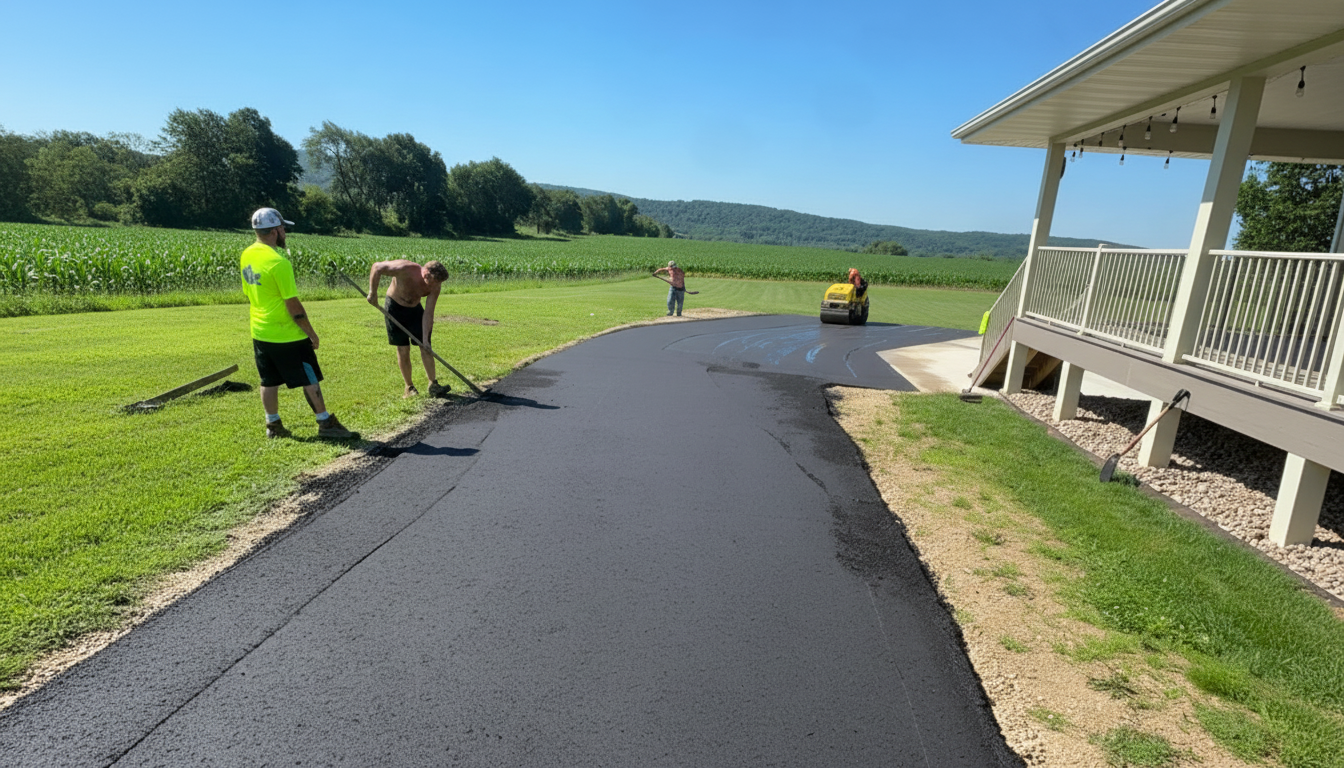
Madison area homeowners face unique challenges when it comes to driveway installation. Wisconsin’s harsh freeze-thaw cycles, combined with our region’s clay-rich soils and short paving season, demand expert installation techniques that many contractors overlook. A properly installed asphalt driveway in the Madison metro area should last 20-25 years with minimal maintenance, but poor installation can lead to cracking and failure within just a few seasons.
At Wells Asphalt Paving, we’ve been serving Dane County homeowners for decades, understanding exactly what it takes to build driveways that withstand everything from Madison’s brutal winters to the heavy traffic patterns in growing communities like Middleton and Fitchburg. Our family business has perfected installation techniques specifically for our local climate and soil conditions, ensuring your investment delivers lasting value.
This comprehensive guide will walk you through everything Madison area homeowners need to know about professional driveway installation, from proper base preparation to thickness requirements that work in our challenging Wisconsin climate.
Understanding Asphalt Driveway Construction for Wisconsin’s Climate
The Foundation of Long-Lasting Performance
Successful driveway installation in the Madison area starts with understanding our humid continental climate. With winter temperatures regularly dropping below zero and summer highs reaching the 80s and 90s, asphalt experiences significant thermal expansion and contraction. This constant movement, combined with freeze-thaw cycles that can occur 50+ times per winter around Lake Mendota and Lake Monona, places enormous stress on improperly constructed driveways.
Professional driveway paving requires three critical components working together: a stable subgrade (your existing soil), a properly compacted aggregate base, and the right thickness of asphalt. Each layer must be engineered for our local conditions. The clay soils common throughout Dane County, from Madison’s unique isthmus geography between the lakes to the rolling hills of Fitchburg and Cross Plains, retain moisture and are particularly susceptible to frost heaving without proper drainage and base preparation.
Why Thickness Matters in Freeze-Thaw Conditions
Most residential driveways in the Madison area should be 3 inches thick minimum—not the 2-inch thickness some contractors propose to win bids. While 2 inches might work in warmer climates, Wisconsin’s temperature extremes demand the additional thermal mass and structural integrity that 3 inches provides. For homeowners with RVs, boats, or work trucks—common in communities like Waunakee and DeForest—4 inches becomes the preferred thickness to handle the additional loading.
The extra thickness costs relatively little during installation but can extend your driveway’s lifespan significantly. Wells Asphalt Paving always explains this difference to our customers because we’ve seen too many thin driveways fail prematurely throughout the Madison metro area, requiring complete replacement rather than simple maintenance.
Critical Base Preparation for Madison Area Soil Conditions
The 6-Inch Rule for Dane County Driveways
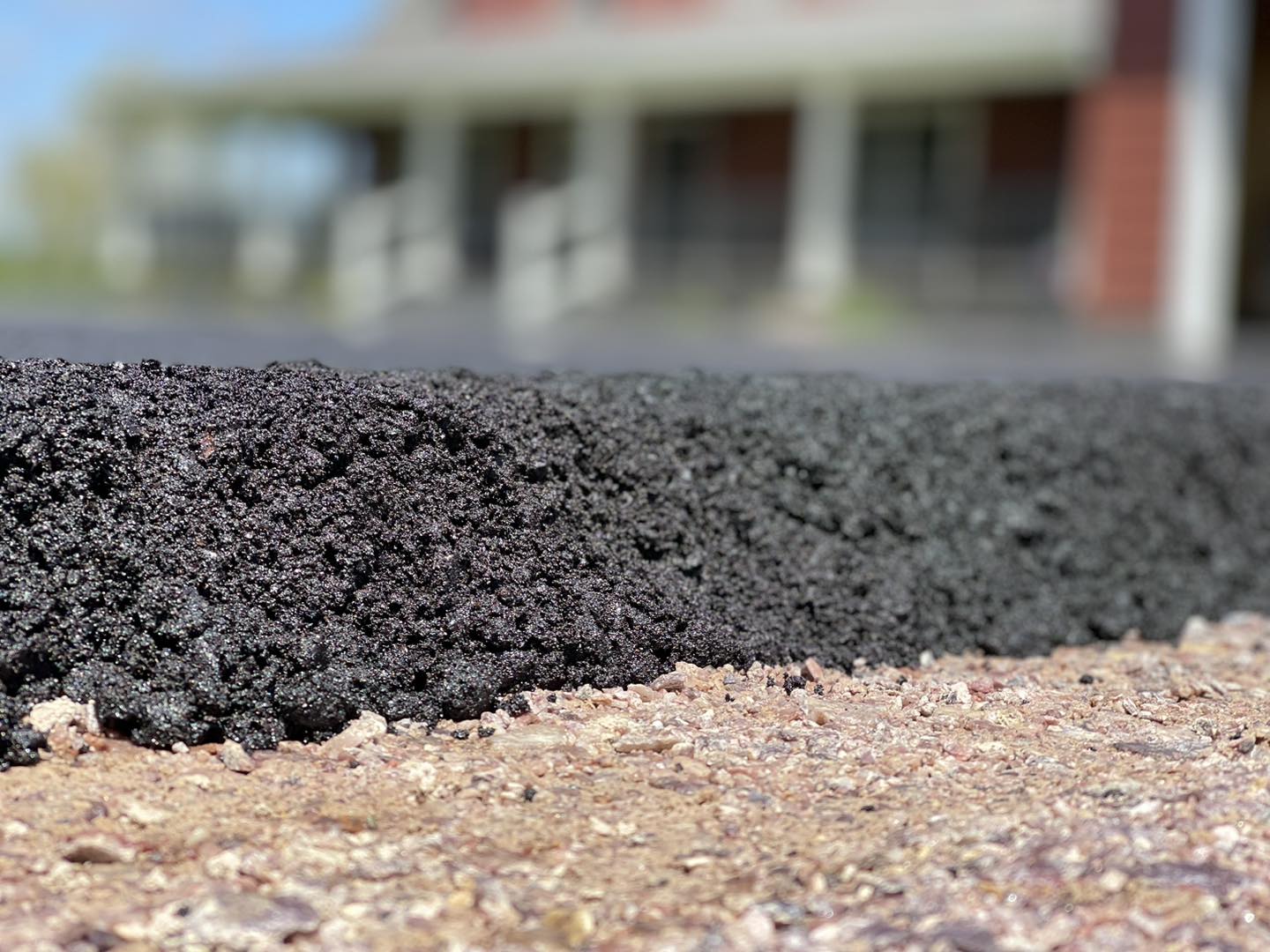
Proper base preparation separates professional driveway installation from amateur work, especially in our region’s challenging soil conditions. Madison area driveways require a minimum of 6 inches of compacted crushed aggregate base—not the 4-inch minimum that might suffice in areas with better-draining soils.
This aggregate base serves multiple functions in our climate. It provides a stable platform that won’t shift during freeze-thaw cycles, creates proper drainage to prevent water from pooling under the asphalt, and distributes vehicle loads across a wider area to prevent subgrade failure. The base material must be dense-graded crushed stone or processed gravel, properly compacted to 95% Standard Proctor density using vibratory compaction equipment.
Subgrade Evaluation and Preparation
Before any base material goes down, professional contractors evaluate the existing subgrade conditions. In areas like Mount Horeb and Black Earth, where clay content is particularly high, additional preparation may be necessary. This might include removing unsuitable material, improving drainage with French drains, or adding geotextile fabric to prevent base contamination.
The subgrade must be proof-rolled to identify any soft spots that could cause future settlement. Any areas that deflect under the proof roller need attention before proceeding. This step is crucial but often skipped by contractors trying to save time or reduce costs—a shortcut that leads to premature failure in Wisconsin’s challenging climate.
Compaction: The Make-or-Break Step
Simply dumping and grading base material isn’t enough for lasting driveway performance. Proper compaction is essential for preventing settlement and ensuring stability through Madison’s freeze-thaw cycles. Each lift of base material (typically placed in 3-inch lifts) must be compacted using appropriate equipment. Plate compactors work for smaller residential driveways, while larger projects may require vibratory rollers.
Proper compaction prevents the base from settling after the asphalt is placed, which would cause cracking and eventual failure. Wells Asphalt Paving uses moisture control and multiple passes to achieve the required density, understanding that this step cannot be rushed or compromised—especially given our region’s clay soils and moisture retention challenges.
Professional Installation Process and Timeline
Seasonal Considerations for Madison Area Installation
Wisconsin’s short paving season typically runs from April through October, with optimal conditions occurring between May and September. Air temperatures must be above 50°F, with pavement temperatures also above 50°F for proper compaction. Additionally, no rain can be forecast for 24 hours after installation to allow proper curing—a particular challenge given Madison’s variable spring and fall weather patterns.
The installation process for a typical residential driveway takes one full day, though preparation work may begin earlier. Morning hours are often ideal for starting, allowing the asphalt to be placed and compacted while temperatures are rising rather than falling. This timing is especially important in communities like Verona and Oregon, where elevation changes can affect temperature patterns.
Step-by-Step Installation Process
Professional driveway installation follows a systematic approach that cannot be rushed. First, the existing driveway (if present) is removed and disposed of properly—an important consideration given Madison’s environmental regulations and recycling requirements.
The subgrade is then evaluated, graded to proper slope (typically 2% away from structures to prevent water issues common in our clay soils), and compacted. Next, the aggregate base is placed in lifts, with each lift compacted before the next is added. Proper edge restraint is installed to prevent the base from spreading—particularly important given the frost action common throughout Dane County.
A tack coat may be applied to ensure bonding between the base and asphalt, particularly important in our climate where thermal movement can cause delamination. The asphalt is then placed using appropriate equipment—either a small paver for larger driveways or hand placement for smaller areas. Compaction must occur while the asphalt temperature remains above 185°F, requiring coordination and efficiency from the crew.
Quality Control During Installation
Professional contractors monitor several factors during driveway installation. Asphalt temperature is checked regularly to ensure proper compaction can be achieved. The thickness is verified using a probe or core samples. Density is tested to confirm adequate compaction has been achieved throughout the installation.
Proper joint construction where the driveway meets existing pavement or structures is critical. These transition areas are often where problems develop first in Wisconsin’s climate, so they require special attention during installation to prevent water infiltration and freeze damage.
Materials and Quality Standards for Long-Term Performance
Asphalt Mix Selection for Residential Applications
Not all asphalt mixes are created equal, and the mix selection significantly impacts long-term performance in Madison’s challenging climate. For residential driveways throughout Dane County, a dense-graded mix with appropriate aggregate gradation provides the best balance of durability, workability, and cost-effectiveness.
The mix should contain quality aggregates sourced from local quarries that meet ASTM specifications. The asphalt binder grade must be appropriate for our climate zone—typically a PG 58-28 or PG 64-22 depending on the specific application and expected traffic loading. These grades are specifically designed to handle Wisconsin’s temperature extremes without becoming too brittle in winter or too soft in summer.
Quality Assurance and Testing Standards
Professional driveway installation includes quality assurance measures that ensure the finished product meets industry standards. This includes verifying that the asphalt mix meets job specifications, monitoring placement and compaction temperatures, and testing final density to confirm adequate compaction.
Wells Asphalt Paving follows NAPA (National Asphalt Pavement Association) guidelines and AASHTO standards for residential construction, ensuring that every driveway meets or exceeds industry benchmarks for quality and durability. These standards are particularly important in Wisconsin, where substandard installation quickly becomes apparent through our harsh weather cycles.
Material Sourcing and Supply Chain Management
Working with reputable suppliers ensures consistent material quality throughout the paving season. Local asphalt plants in the Madison area produce mixes specifically formulated for our climate conditions, and establishing relationships with these suppliers helps ensure availability during peak construction season—typically May through September in our region.
Quality aggregate sources are equally important for lasting driveway performance. The crushed stone used for base construction should come from quarries that produce material meeting gradation and durability requirements. Using inferior base materials to save costs inevitably leads to premature failure, particularly in our freeze-thaw environment.
Maintenance and Long-Term Performance in Wisconsin’s Climate
Preventive Maintenance for Maximum Lifespan
Even the best-installed driveway requires maintenance to achieve its full potential lifespan in Wisconsin’s challenging climate. This typically includes crack sealing every 3-5 years and sealcoating every 2-3 years. These preventive measures protect the asphalt from water infiltration and UV damage while maintaining the attractive appearance Madison area homeowners expect.
Crack sealing is particularly important in our freeze-thaw environment. Small cracks that develop naturally over time can allow water to penetrate into the base, where freezing and thawing can cause significant damage. Professional crack sealing using hot-applied sealants provides long-lasting protection against Wisconsin’s harsh winters.
Seasonal Care and Snow Removal Considerations
Madison area homeowners need to understand how snow removal practices affect driveway longevity. Using metal snow shovels or aggressive plowing can damage the surface, while deicing chemicals can accelerate deterioration if used excessively. This is particularly important given our region’s heavy snowfall and extended winter season.
Proper drainage maintenance is equally important for driveway performance. Keeping gutters clean and ensuring water flows away from the driveway prevents ice dams and standing water that can cause premature failure. Simple maintenance practices can significantly extend the life of a properly installed driveway, particularly important given our clay soils’ tendency to retain moisture.
When to Consider Replacement vs. Repair
Understanding when repair is sufficient versus when replacement is necessary helps homeowners make informed decisions about their driveway investment. Surface cracking and minor settling can often be addressed with maintenance, while extensive cracking, base failure, or significant settlement typically requires reconstruction.
A properly installed driveway in the Madison area should provide 20-25 years of service before major renovation is needed. If problems develop earlier, they’re often the result of installation shortcuts rather than normal wear and aging—common issues we see throughout Dane County when homeowners choose the lowest bidder without considering installation quality.
When selecting a contractor for your driveway installation, experience with local conditions matters enormously. Wells Asphalt Paving has been serving homeowners throughout Dane County for decades, from the lakefront properties of Madison to the growing subdivisions of Middleton, Fitchburg, and Verona. Our family business, led by owner Louie Wells, understands the specific challenges of Wisconsin’s climate and has developed installation techniques that maximize performance and longevity.
We provide detailed estimates that explain our process, use quality materials sourced from local suppliers, and stand behind our work with comprehensive warranties. Our extensive service area covers all of Dane County and surrounding communities, ensuring we can provide the same quality driveway installation whether you’re in downtown Madison, suburban Waunakee, or the growing communities of Sun Prairie and Oregon.
Unlike contractors who cut corners on base preparation or asphalt thickness, Wells Asphalt Paving follows proven installation methods that account for our region’s unique challenges. We understand that a driveway installation is a significant investment for Madison area homeowners, and we’re committed to delivering results that provide decades of reliable service.
Ready to Get Started?
For professional driveway installation that will withstand Wisconsin’s challenging climate and provide decades of reliable service, contact Wells Asphalt Paving today. Our experienced team is ready to evaluate your project and provide a detailed estimate that explains exactly what it takes to build a driveway that lasts in the Madison area.
Call Wells Asphalt Paving at (608) 912-3772 for your free estimate, or visit us online at wellsasphaltpaving.com. Discover why Madison area homeowners have trusted our family business for their most important paving projects for decades.

Quality Asphalt Paving Backed by Four Generations of Wisconsin Experience
Since 1978, Wells Asphalt Paving has been Wisconsin's trusted choice for professional asphalt paving services
608-912-3772
Request a Quote
Wells Asphalt Paving
Another Job Wells Done!
Proudly serving Wisconsin since 1978 with locations in Madison and Baraboo
CONTACT US
608-912-3772
Madison Location: 6666 Odana Rd #163, Madison, WI 53719
Baraboo Location: Box 424, Baraboo, WI 53913
HOURS
Mon - Sun 7:00 am - 5:00 pm
Social Media