Professional Asphalt Paving Services Throughout Wisconsin & Florida
Serving Madison, Baraboo, Wisconsin Dells, and surrounding communities with four generations of asphalt expertise
Call
(608) 912-3772
for your
Family-owned • Licensed & Insured • Free Estimates
Blog
Spring Driveway Repairs: Fixing Winter Damage in Dane County
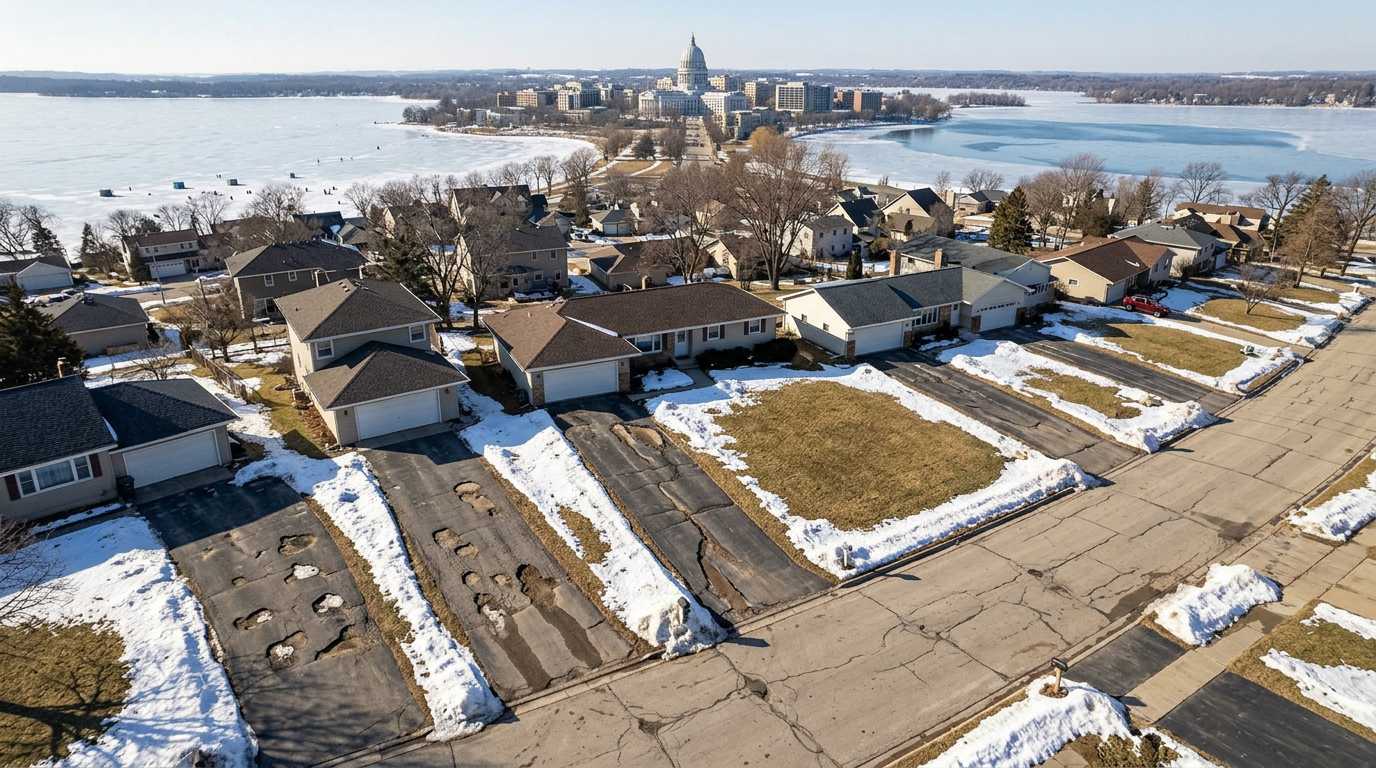
Wisconsin’s brutal freeze-thaw cycles take a serious toll on asphalt driveways throughout Dane County. From Madison’s unique isthmus geography between Lakes Mendota and Monona to Sun Prairie’s rapidly expanding neighborhoods, homeowners across the region wake up each spring to discover new cracks, potholes, and surface damage that wasn’t there last fall.
The culprit? Our humid continental climate creates the perfect storm for pavement destruction. When temperatures swing from 20 below zero in January to 50 degrees in March, water trapped in tiny cracks expands and contracts repeatedly, gradually tearing apart even well-built driveways. Add in the salt and sand from Madison’s aggressive snow removal operations, and you have a recipe for accelerated deterioration.
At Wells Asphalt Paving, we’ve been helping Dane County families restore their driveways after harsh winters for decades. Our family business, led by owner Louie Wells, understands exactly what Wisconsin weather does to asphalt, and we know how to fix it right the first time. Whether you’re dealing with minor surface cracking in Stoughton’s historic neighborhoods or major pothole damage near the UW-Madison campus, proper spring assessment and repair can extend your driveway’s life by years.
Why Dane County Driveways Face Unique Winter Challenges
Freeze-Thaw Cycles and Thermal Cracking
Dane County’s location in south-central Wisconsin subjects driveways to some of the most destructive weather patterns in the Midwest. Our region experiences an average of 40-60 freeze-thaw cycles each winter—far more than areas with consistently cold temperatures. Each cycle forces water in pavement cracks to expand by roughly 9%, creating tremendous pressure that gradually widens existing cracks and creates new ones.
The asphalt binder that holds your driveway together becomes increasingly brittle as temperatures drop below freezing. When the material contracts during those bitter January nights common throughout the Madison area, it develops thermal stress cracks. These hairline fractures might seem minor, but they’re entry points for water infiltration. Once water gets in and freezes, the damage accelerates exponentially.
Salt and Chemical Damage
Madison’s position as Wisconsin’s state capital means heavy traffic on surrounding roads, requiring aggressive snow removal and de-icing throughout Dane County. The salt and chemicals used to keep roads safe don’t stop at the street—they get tracked onto driveways and can accelerate asphalt deterioration. Salt draws moisture into pavement and causes the asphalt binder to break down more quickly, leading to raveling and surface loss.
This is particularly problematic in areas like Sun Prairie, where many residents commute to Madison daily, bringing road salt home on their vehicles throughout the winter months.
Soil Conditions and Drainage Issues
Much of Dane County sits on glacial till and clay soils that don’t drain well. Poor drainage beneath driveways means water stays in contact with the pavement base longer, increasing freeze-thaw damage. Madison’s unique geography between the lakes can create additional drainage challenges, while Stoughton’s rolling terrain and Sun Prairie’s rapid development on previously agricultural land sometimes means driveways are built on soils that haven’t fully settled.
Spring Damage Assessment: What to Look For
Surface Cracking Patterns
Not all cracks are created equal, and understanding the difference helps determine the right repair approach. Thermal cracks typically run perpendicular to the driveway’s length and are relatively straight. These develop from temperature-related contraction and are especially common after severe winters like those we experience in Dane County.
Fatigue cracking appears as interconnected cracks forming a pattern that looks like alligator skin, usually indicating structural problems with the base or subgrade. Block cracking creates a pattern of rectangular pieces and often signals that the asphalt binder has aged and oxidized beyond its useful life. This type of damage is common in older driveways throughout established Madison neighborhoods and historic areas of Stoughton.
Pothole Development and Edge Deterioration
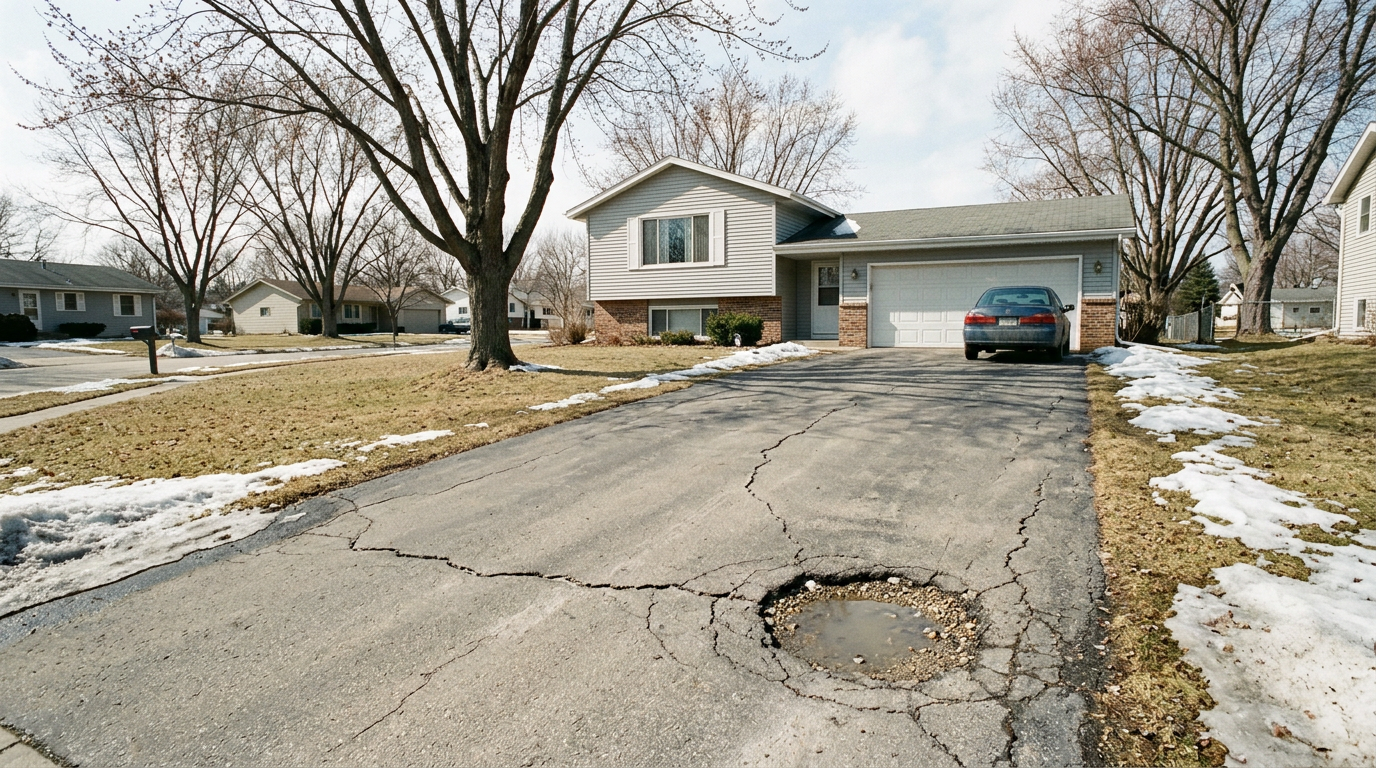
Potholes don’t appear overnight—they’re the end result of a process that starts with small cracks. Water infiltrates these cracks, weakens the base material, and repeated vehicle loading eventually causes chunks of pavement to break away. In residential driveways, this process is accelerated by the repeated loading from vehicles turning and parking in the same spots.
Edge deterioration is particularly common where driveways meet grass or landscaping. Without proper edge support, the pavement gradually crumbles away. This problem is especially prevalent in Sun Prairie’s newer subdivisions, where landscaping may not have been properly established to support driveway edges.
Drainage and Base Issues
Spring is the perfect time to assess drainage around your driveway. Look for areas where water pools or where the pavement appears to be settling. Soft spots that feel spongy underfoot indicate base failure—a serious problem that requires more than surface repairs.
Standing water accelerates pavement deterioration and creates ideal conditions for freeze-thaw damage. If your driveway has drainage issues, addressing them during spring repairs prevents much more expensive problems down the road.
Professional Repair Methods That Last
Full-Depth Patching for Permanent Solutions
When dealing with potholes or severely damaged areas, full-depth patching provides the only permanent solution. This process involves cutting out the damaged pavement in square or rectangular shapes, extending at least 6-12 inches beyond visible distress to reach sound material. The key is removing all failed material—replacing asphalt over a compromised base simply delays the inevitable.
Wells Asphalt Paving excavates to stable base material, applies tack coat to ensure proper bonding, and places quality hot mix asphalt in lifts no thicker than 4 inches. Proper compaction is critical—we achieve 92% or higher density to ensure the patch performs as well as the surrounding pavement. After the patch cures, we seal the perimeter to prevent water intrusion at the edges.
This method costs more initially than surface repairs, but it addresses the root cause of failure. A properly executed full-depth patch should last as long as the original pavement, making it the most cost-effective long-term solution for significant winter damage.
Crack Sealing and Surface Treatments
For cracks wider than 1/4 inch, professional crack sealing prevents water infiltration and extends pavement life significantly. We use hot-applied rubberized crack sealant that remains flexible through Wisconsin’s extreme temperature swings. The process involves cleaning out loose material, applying the sealant, and ensuring proper adhesion to crack walls.
Surface treatments like sealcoating can protect driveways from UV damage and water infiltration, but they’re not appropriate for all situations. Sealcoating works best on pavements in good structural condition—it’s a preservation treatment, not a repair method. Applying sealcoat over cracked or deteriorated pavement without proper repairs is like painting over rust.
Material Selection for Wisconsin Conditions
Not all asphalt mixes perform equally in our climate. For driveway repairs throughout Dane County, Wells Asphalt Paving typically uses dense-graded hot mix asphalt with 5.5-6.5% asphalt binder content. The higher binder content provides better durability and water resistance for surface applications in our freeze-thaw environment.
Cold mix asphalt is sometimes used for emergency repairs during winter months, but it’s a temporary solution. Cold mix doesn’t compact as well as hot mix and typically lasts only 3-12 months. We’re transparent with customers about this limitation—cold mix gets you through winter, but permanent repairs require hot mix asphalt applied under proper conditions.
Timing Your Spring Repairs Right
Optimal Repair Windows in Wisconsin
Successful asphalt repairs require specific temperature conditions. Both air temperature and pavement temperature must be at least 50°F, with no rain forecast for 24 hours. In Dane County, this typically means the repair season runs from late April through October, with the best conditions occurring in late spring and early fall.
Spring repairs offer several advantages. The full extent of winter damage is visible, allowing for comprehensive assessment and repair. Temperatures are moderate, providing good working conditions without the extreme heat of summer. Most importantly, spring repairs give the pavement maximum time to cure and weather before the next winter cycle hits Madison, Sun Prairie, and Stoughton.
Weather Considerations and Planning
Wisconsin weather can be unpredictable, especially during spring transition periods. Wells Asphalt Paving monitors weather forecasts carefully and maintains flexibility in scheduling. A sudden cold snap or unexpected rain can delay repairs, but rushing work in poor conditions leads to failures.
For homeowners planning spring repairs, early scheduling is crucial. The window for quality asphalt work is limited, and contractors’ schedules fill quickly once conditions allow. Planning repairs in March for April execution ensures you get on the schedule before the rush begins.
Why Choose Wells Asphalt Paving for Your Spring Repairs
Decades of Dane County Experience
Not all asphalt contractors understand the unique challenges of Wisconsin’s climate. At Wells Asphalt Paving, our decades of experience in Dane County have taught us exactly what works and what doesn’t in our freeze-thaw environment. We’ve seen every type of winter damage and know how to repair it properly.
Our established family business has built relationships throughout the region, from Madison’s established neighborhoods near the Capitol to Sun Prairie’s booming developments and Stoughton’s historic districts. We understand local soil conditions, drainage patterns, and the specific challenges each area faces.
Quality Materials and Proven Techniques
Professional repairs require quality materials and proven techniques. We source aggregates that meet industry standards for durability and use asphalt binders appropriate for Wisconsin’s temperature extremes. Our equipment and methods ensure proper compaction and density—critical factors that determine repair longevity.
We’re transparent about repair methods and realistic about expectations. When a customer asks about quick fixes, we explain why proper repairs take time and cost more initially but save money long-term. Our reputation throughout Dane County depends on repairs that last, not just getting through the next season.
Comprehensive Service Throughout Dane County
Wells Asphalt Paving provides complete residential and commercial asphalt services throughout our extensive service area, including Madison, Middleton, Fitchburg, Sun Prairie, Stoughton, Verona, and dozens of other Dane County communities. Whether you need minor crack repairs or complete driveway replacement, we have the experience and equipment to handle projects of any size.
Spring is the perfect time to address winter damage to your driveway, but the window for quality repairs is limited in Wisconsin. Wells Asphalt Paving has been serving Dane County families for generations, and we understand exactly what Wisconsin winters do to asphalt pavements. From comprehensive damage assessment to permanent repair solutions, we have the experience and expertise to restore your driveway properly.
Don’t let minor spring damage become major fall problems. The freeze-thaw cycles that damaged your driveway this winter will be back next year, and unrepaired cracks only get worse. Contact Wells Asphalt Paving today for a free assessment of your driveway’s condition. We serve Madison, Sun Prairie, Stoughton, and all of Dane County with the quality repairs your driveway deserves.
Call us at (608) 912-3772 or visit www.wellsasphaltpaving.com to schedule your free spring driveway assessment. Don’t let another Wisconsin winter destroy your investment—let our family business protect yours.

Quality Asphalt Paving Backed by Four Generations of Wisconsin Experience
Since 1978, Wells Asphalt Paving has been Wisconsin's trusted choice for professional asphalt paving services
608-912-3772
Request a Quote
Wells Asphalt Paving
Another Job Wells Done!
Proudly serving Wisconsin since 1978 with locations in Madison and Baraboo
CONTACT US
608-912-3772
Madison Location: 6666 Odana Rd #163, Madison, WI 53719
Baraboo Location: Box 424, Baraboo, WI 53913
HOURS
Mon - Sun 7:00 am - 5:00 pm
Social Media