Professional Asphalt Paving Services Throughout Wisconsin & Florida
Serving Madison, Baraboo, Wisconsin Dells, and surrounding communities with four generations of asphalt expertise
Call
(608) 912-3772
for your
Family-owned • Licensed & Insured • Free Estimates
Blog
Spring Project Planning: Getting on the Schedule Early in Madison & Baraboo
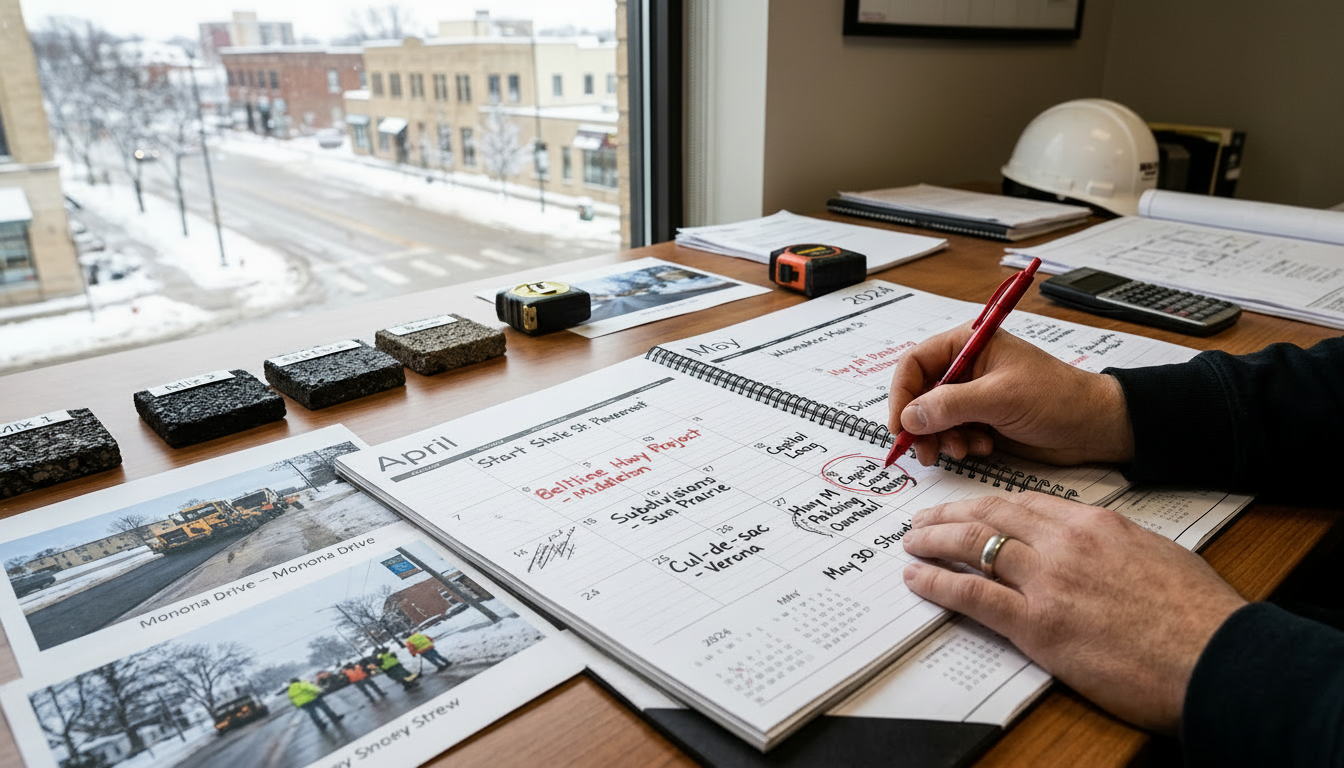
Wisconsin’s humid continental climate creates one of the most challenging paving environments in the Midwest. The effective paving season typically runs from late April through October—just six months to complete a year’s worth of projects. This compressed timeline affects everything from material availability to contractor scheduling, making early project planning crucial for success.
Temperature requirements drive these constraints. Hot mix asphalt requires ambient temperatures above 50°F for proper placement and compaction, with ideal conditions occurring when temperatures reach 60°F or higher. Madison’s average last frost occurs around April 20th, but consistent warm weather often doesn’t arrive until early May. Similarly, Baraboo’s location in the Baraboo Hills can experience microclimates that extend cold conditions even later.
The spring thaw period presents additional challenges. Freeze-thaw cycles throughout March and early April create unstable subgrade conditions that make quality construction impossible. Contractors must wait for soil moisture levels to stabilize and bearing capacity to return to acceptable levels. This means the actual construction season often doesn’t begin until the first week of May, further compressing an already tight schedule.
For commercial properties in Madison’s technology corridor or municipal projects serving the University of Wisconsin, this timeline compression can impact business operations and budget planning. Early scheduling ensures your project happens during optimal weather conditions rather than being pushed into the challenging fall months when temperatures become unpredictable.
Why Madison and Baraboo Fill Up Fast
The Madison metropolitan area’s diverse economy creates exceptional demand for asphalt services across multiple sectors. State government facilities, University of Wisconsin infrastructure, and the growing biotechnology sector generate substantial commercial and institutional paving needs. Add residential demand from Madison’s expanding suburbs—Middleton, Verona, Sun Prairie—and the scheduling pressure intensifies significantly.
Baraboo faces unique seasonal challenges that compound scheduling difficulties. Tourism traffic from Devil’s Lake State Park and Wisconsin Dells creates urgent spring repair needs as winter damage must be addressed before peak visitor season begins. Circus World Museum, Al. Ringling Theatre, and other attractions require parking lot maintenance completed by Memorial Day weekend when tourism activity peaks.
Municipal contracts further tighten contractor availability. Both Dane and Sauk Counties typically award their annual road maintenance contracts in early spring, immediately consuming significant contractor capacity. These large-scale projects often take priority due to their size and guaranteed payment terms, leaving less availability for private projects.
The ripple effect extends throughout the region. When Madison contractors reach capacity, demand spills over to neighboring communities like Baraboo, Portage, and Wisconsin Dells. This regional competition for contractor services means that even smaller projects can face extended delays without advance planning.
Wells Asphalt Paving’s extensive service area—covering over 50 communities from Madison to Monroe—gives us unique insight into these regional scheduling patterns. We consistently see the best project outcomes when customers begin their spring planning process in February or March, well before the construction season begins.
The Strategic Advantages of Early Booking
Scheduling flexibility represents the primary advantage of early project planning. Customers who book in February or March can choose their preferred completion dates rather than accepting whatever slots remain available. This flexibility proves especially valuable for businesses that need to coordinate paving work with operational schedules or special events.
Material procurement benefits significantly from advance planning. Hot mix asphalt plants in the Madison area—including locations in Sun Prairie and Middleton—begin production schedules based on early contractor commitments. Early booking ensures access to optimal mix designs and eliminates the risk of material shortages during peak demand periods.
Weather contingency planning becomes more manageable with extended timelines. Wisconsin’s unpredictable spring weather can delay projects by days or weeks. Early scheduling provides buffer time to accommodate weather delays without pushing projects into less favorable fall conditions when temperatures become increasingly unreliable.
Cost advantages often accompany early booking commitments. Many contractors offer early-season pricing incentives to help balance their project schedules. Additionally, advance planning allows for better coordination of related services—excavation, drainage improvements, landscaping—that can reduce overall project costs through efficient sequencing.
The quality benefits of early scheduling cannot be overstated. Projects completed during optimal weather conditions—typically May through August—achieve better compaction, superior bonding, and enhanced long-term performance. Rushing projects into marginal weather windows compromises these quality factors and can reduce pavement life significantly.
Planning Your Project Timeline
Effective spring planning begins with understanding the complete process timeline, not just construction duration. A typical residential driveway replacement requires 2-3 days of actual construction but may need 2-3 weeks of lead time for permits, material ordering, and scheduling coordination. Commercial projects involving site preparation, drainage improvements, or utility coordination can require 4-6 weeks of advance planning.
Permit requirements vary significantly between Madison and Baraboo jurisdictions. Madison’s development review process can take 2-4 weeks for commercial projects, while residential work typically requires 1-2 weeks for permit approval. Baraboo’s smaller municipal staff may process permits more quickly, but seasonal workload fluctuations can create unexpected delays.
Material delivery scheduling requires careful coordination during peak season. Hot mix asphalt plants operate on tight production schedules, with delivery windows often scheduled days in advance. Cold mix materials for emergency repairs remain available throughout winter, but hot mix production—essential for permanent, high-quality repairs—requires advance coordination with plant schedules.
Subcontractor availability affects project timelines significantly. Excavation contractors, utility companies, and specialized services like line striping operate on similar seasonal constraints. Early planning ensures these supporting services align with your paving schedule rather than creating bottlenecks that delay project completion.
Wells Asphalt Paving recommends beginning project discussions in February for spring completion, March for summer projects, and April for fall scheduling. This timeline provides adequate lead time for planning, permits, and coordination while ensuring optimal weather conditions for construction.
Maximizing Your Investment Through Strategic Timing
Quality construction requires optimal weather conditions that early planning helps secure. Hot mix asphalt achieves proper compaction and bonding when placed during warm, dry conditions. Projects scheduled during peak season—June through August—benefit from consistent temperatures, lower humidity, and minimal precipitation that enhance construction quality.
Contractor attention and resource allocation improve with advance scheduling. Early-booked projects receive priority attention from experienced crews rather than being rushed through by stretched resources during peak demand periods. This attention to detail translates directly into superior workmanship and longer pavement life.
Coordination opportunities expand with extended planning timelines. Property owners can schedule complementary improvements—sealcoating, line striping, landscaping—to maximize the visual and functional impact of their investment. These coordinated projects often achieve better overall results at lower combined costs.
Long-term maintenance planning benefits from strategic project timing. Pavements installed during optimal conditions with proper construction practices require less frequent maintenance and achieve longer service life. This extended performance provides better return on investment and reduces lifecycle costs significantly.
For commercial properties in Madison’s competitive market or tourism-dependent businesses in Baraboo, strategic timing can impact revenue generation. Parking lots and access roads completed before peak business seasons avoid disruption during critical revenue periods while ensuring optimal conditions for customer access.
Wells Asphalt Paving has served south-central Wisconsin’s paving needs for decades, building our reputation on quality construction and reliable service throughout Dane and Sauk Counties. Our extensive service area—from Madison’s urban core to Baraboo’s tourism district—gives us unique insight into regional scheduling challenges and optimal project timing.
Our early planning process begins with comprehensive site evaluation and project scoping. We assess existing conditions, drainage requirements, traffic patterns, and site-specific challenges to develop realistic timelines and accurate project estimates. This thorough approach eliminates surprises and ensures smooth project execution when construction begins.
We maintain strong relationships with local suppliers and subcontractors that enable us to secure materials and coordinate services even during peak demand periods. These partnerships, developed over decades of operation, provide our customers with reliable access to quality materials and supporting services regardless of market conditions.
Don’t let Wisconsin’s short paving season compromise your project quality or timeline. Contact Wells Asphalt Paving today to discuss your spring planning needs and secure your preferred scheduling slot. Our experienced team is ready to help you navigate the planning process and ensure your asphalt investment delivers maximum value and performance for years to come.
Ready to get started? Call Wells Asphalt Paving at (608) 912-3772 or visit our website at wellsasphaltpaving.com to schedule your free consultation and secure your spot for the upcoming season.

Quality Asphalt Paving Backed by Four Generations of Wisconsin Experience
Since 1978, Wells Asphalt Paving has been Wisconsin's trusted choice for professional asphalt paving services
608-912-3772
Request a Quote
Wells Asphalt Paving
Another Job Wells Done!
Proudly serving Wisconsin since 1978 with locations in Madison and Baraboo
CONTACT US
608-912-3772
Madison Location: 6666 Odana Rd #163, Madison, WI 53719
Baraboo Location: Box 424, Baraboo, WI 53913
HOURS
Mon - Sun 7:00 am - 5:00 pm
Social Media