Historic Home Driveway Restoration in Madison’s Older Neighborhoods

Original Construction Challenges
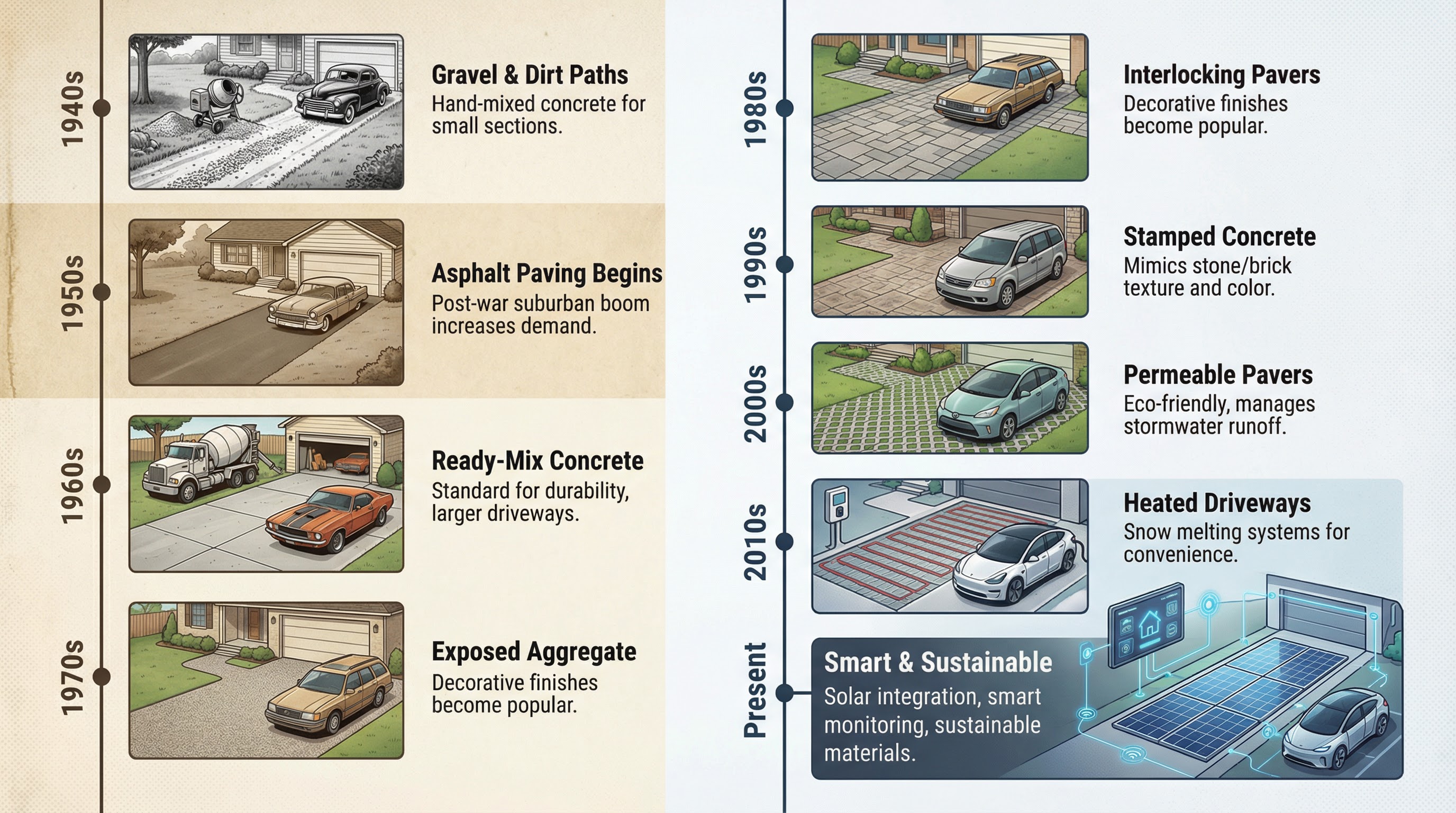
Many driveways in Madison’s established neighborhoods date back 50-80 years, built when construction standards and vehicle requirements were very different. These vintage surfaces often show their age through:
Surface deterioration from decades of Wisconsin’s harsh freeze-thaw cycles
Settlement issues caused by changing soil conditions and mature tree roots
Drainage problems that weren’t apparent when the homes were new
Structural inadequacy for today’s heavier vehicles
The concrete driveways common in neighborhoods like University Heights and Third Lake Ridge were built without modern air entrainment, making them particularly vulnerable to frost damage. When winter temperatures drop below freezing—which happens regularly in Madison—water trapped in the concrete expands, causing the characteristic scaling and cracking we see in older driveways.
Madison’s Unique Geographic Challenges
Madison’s position on the isthmus between Lake Mendota and Lake Monona creates specific challenges for driveway restoration. The lakes moderate some temperature swings, but they also contribute to:
Higher humidity levels that affect curing and longevity
Unique drainage patterns influenced by the area’s topography
Varied microclimates across different neighborhoods
Clay soil conditions that require special base preparation
Our decades of experience serving Madison homeowners—from Middleton to Monona, Sun Prairie to Fitchburg—has taught us how these local conditions affect different restoration approaches.
The Historic Driveway Restoration Process
Comprehensive Assessment
Every restoration project begins with thorough evaluation. We examine:
Surface Conditions: Looking beyond obvious cracks to identify underlying structural issues that could affect new pavement performance.
Drainage Patterns: Understanding how water moves around your property, especially important in neighborhoods with mature landscaping and established grade patterns.
Base Stability: Determining whether the existing foundation can support modern traffic loads or needs reinforcement.
Integration Needs: Considering how restoration will work with your home’s architecture, existing landscaping, and neighborhood character.
Preservation-Minded Material Selection
Historic driveway restoration requires balancing authenticity with performance. We recommend:
Modern Asphalt Mixes: Today’s asphalt provides superior durability compared to historical alternatives while maintaining appropriate aesthetics for older neighborhoods.
Proper Thickness Standards: Minimum 3-inch asphalt depth over properly prepared base ensures longevity—critical for maintaining historic property values.
Quality Base Materials: Dense-graded crushed stone compacted to professional standards provides the stable foundation essential for Wisconsin’s climate conditions.
Installation Timeline and Seasonal Considerations
Madison’s relatively short paving season makes timing crucial for historic restoration projects. We typically recommend:
Spring Projects: Allow assessment of winter damage and completion before summer heat stress.
Summer Work: Optimal conditions for both material performance and homeowner convenience.
Fall Completion: Must account for weather windows and proper curing time before winter.
Most residential driveway restorations take 2-3 days from start to finish, depending on size and complexity.
Maintaining Your Restored Historic Driveway
Seasonal Care Strategies
Proper maintenance protects your restoration investment while preserving neighborhood character:
Regular Sealcoating: Every 2-3 years provides UV protection and water resistance, essential for Wisconsin’s climate extremes.
Prompt Crack Repair: Addressing small issues before freeze-thaw cycles cause expansion saves money and maintains appearance.
Appropriate Winter Care: Using proper snow removal techniques and suitable deicing materials protects both pavement and surrounding landscape.
Long-Term Performance Expectations
With proper installation and maintenance, your restored driveway should provide 15-20 years of reliable service. This longevity is especially important for historic properties, where frequent replacement could disrupt established landscaping and neighborhood aesthetics.
Why Choose Wells Asphalt Paving for Historic Restoration
As a large, established family business serving Madison and surrounding Dane County communities, Wells Asphalt Paving brings unique advantages to historic driveway restoration:
Local Expertise: Decades of experience working in Madison’s established neighborhoods, from Cross Plains to Cottage Grove, Waunakee to Stoughton.
Preservation Sensitivity: Understanding how to balance modern performance requirements with historic neighborhood character.
Quality Materials: Access to premium asphalt mixes and base materials appropriate for Wisconsin’s challenging conditions.
Comprehensive Service: Full-service capabilities for both residential and commercial projects throughout our extensive service area.
Family Commitment: As a family-owned business, we’re invested in long-term relationships with our community.
Don’t let driveway deterioration detract from your historic home’s charm and value. Whether you’re in Madison’s near-east side, the tree-lined streets of Maple Bluff, or any of the established neighborhoods throughout Dane County, Wells Asphalt Paving has the expertise to restore your driveway with preservation-minded care.
Contact Wells Asphalt Paving today for your free estimate. We’ll assess your historic driveway’s specific needs and recommend restoration solutions that honor your home’s character while ensuring reliable performance for years to come.
Call now to schedule your consultation and discover how expert restoration can enhance both your property value and neighborhood’s historic appeal.
Visit us at wellsasphaltpaving.com or call today. Your historic home deserves restoration expertise that preserves the past while building for the future.
