Asphalt Repair vs Replace: Madison & Baraboo Decision Guide
Before choosing between repair and replacement, you need an accurate assessment of your pavement’s current condition. This evaluation goes far beyond surface appearance—it examines the structural integrity of your entire pavement system.
Surface Distress vs. Structural Failure represents the most critical distinction in pavement evaluation. Surface distress includes minor cracking, raveling, and weathering that affects only the top layer of asphalt. These issues, while unsightly, don’t necessarily indicate structural problems. Structural failure, however, involves the base layers and subgrade, creating alligatoring patterns, significant settling, or widespread deterioration.
Madison’s unique isthmus geography between Lakes Mendota and Monona creates specific drainage challenges that can accelerate structural problems. Poor drainage allows water to penetrate the pavement system, weakening the base during freeze-thaw cycles. Similarly, Baraboo’s seasonal tourism traffic from Circus World Museum and Devil’s Lake creates loading patterns that can stress pavements beyond their original design capacity.
Professional Assessment Techniques include core sampling to examine layer thickness and condition, deflection testing to measure structural capacity, and visual surveys following standardized distress identification protocols. Wells Asphalt Paving uses these industry-standard methods to provide accurate condition assessments across our service area from Middleton to Wisconsin Dells.
The timing of your assessment matters significantly in Wisconsin’s climate. Spring evaluations after freeze-thaw damage becomes apparent provide the most accurate picture of your pavement’s condition and help you plan maintenance during the optimal paving season.
Cost-Benefit Analysis: Repair Options and Their Applications
Understanding your repair options and their appropriate applications helps you make informed financial decisions. Each technique addresses specific types of distress and offers different cost-benefit ratios depending on your pavement’s condition.
Crack Sealing and Surface Treatments represent the most cost-effective preventive maintenance for pavements in good structural condition. Hot-applied crack sealant prevents water infiltration that causes freeze-thaw damage, while sealcoating protects against oxidation and weather damage. These treatments typically cost $0.15-0.35 per square foot and can extend pavement life by 3-5 years when applied to structurally sound surfaces.
For Madison’s state government facilities and UW-Madison properties, regular crack sealing programs prove especially valuable given the high traffic volumes and budget constraints. The key is applying these treatments before structural damage occurs—once alligatoring appears, surface treatments become ineffective.
Mill and Overlay Operations address more extensive surface distress while maintaining existing elevations. This rehabilitation technique removes 1.5-2 inches of distressed surface material using precision milling equipment, then replaces it with new asphalt overlay. Mill and overlay typically costs $3-6 per square foot and extends pavement life 10-15 years.
This approach works exceptionally well for Baraboo’s commercial properties serving seasonal tourism traffic. The technique addresses surface cracking and rutting while preserving critical elevation relationships with curbs, drainage systems, and building entrances. Mill and overlay represents the most common rehabilitation technique in the industry because it effectively addresses surface-level problems without the expense of full reconstruction.
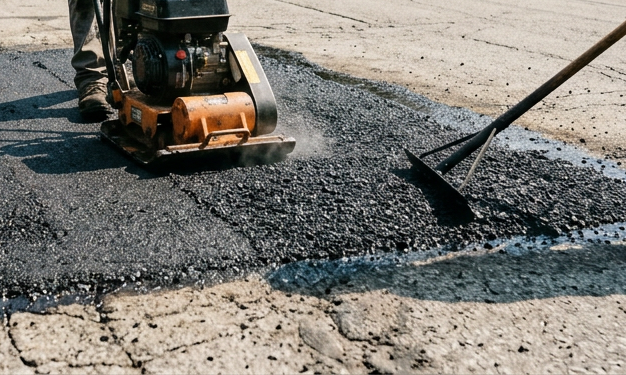
Patching and Spot Repairs target localized failures while preserving the majority of your pavement investment. Full-depth patching removes failed areas down to the base layer and rebuilds the pavement structure. Skin patching addresses surface-level problems in small areas. These targeted repairs cost $8-15 per square foot but can extend overall pavement life when structural problems remain localized.
When Replacement Becomes the Smart Choice
Despite the higher upfront cost, complete pavement replacement sometimes offers the best long-term value. Recognizing when you’ve reached this point prevents throwing good money after bad on ineffective repairs.
Structural Failure Indicators signal that repair options won’t provide lasting solutions. Widespread alligatoring indicates base layer failure that can’t be addressed through surface treatments. Significant settling or heaving suggests subgrade problems that require complete reconstruction. When more than 25-30% of your pavement shows structural distress, replacement typically becomes more cost-effective than extensive patching.
Madison’s heavy traffic corridors serving the Capitol complex and university often reach this threshold after 15-20 years, especially when deferred maintenance allows minor problems to become major failures. The freeze-thaw cycles in our humid continental climate accelerate this deterioration once water penetrates the pavement structure.
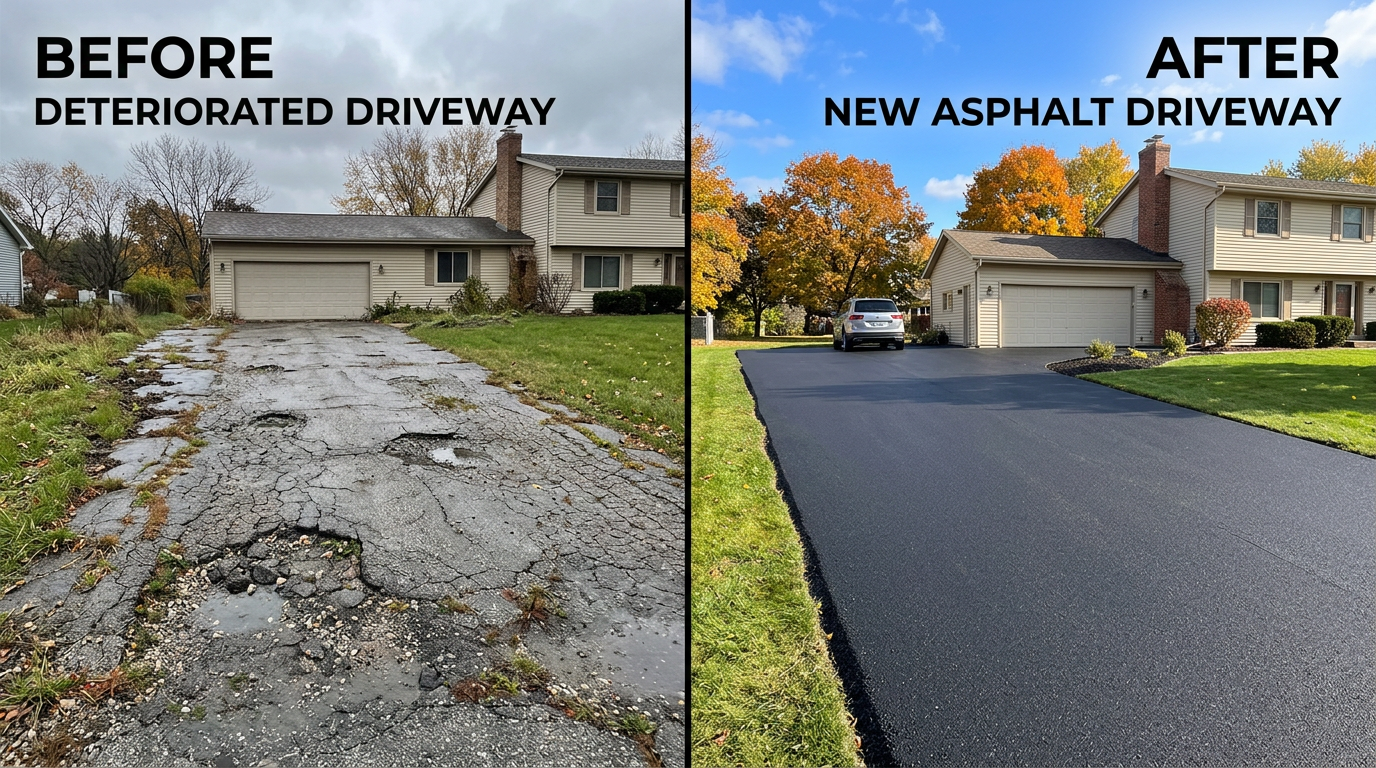
Economic Considerations favor replacement when repair costs approach 60-70% of replacement cost, or when you’re facing repeated repairs every few years. A complete reconstruction typically costs $8-15 per square foot but provides 20-25 years of service life with proper maintenance. This represents better value than repeated overlays that only last 5-8 years each.
Design Improvements often justify replacement even when repairs might be technically feasible. Modern pavement design incorporates better drainage, improved base materials, and optimized thickness for current traffic loads. For Baraboo businesses serving increased tourism traffic, upgrading to handle heavier loads and seasonal demand spikes provides long-term operational benefits.
Timing and Seasonal Factors significantly impact replacement decisions in Wisconsin. Our short paving season from May through October requires careful project planning. Replacement projects need adequate time for proper construction, while repairs can often be completed more quickly during weather windows.
Making Your Decision: A Systematic Approach
Successful pavement management requires a systematic approach that considers both immediate needs and long-term planning. This decision framework helps you evaluate options objectively and choose the most cost-effective solution.
Age and Service Life Analysis provides crucial context for your decision. Pavements typically require their first major maintenance at 7-10 years, with subsequent interventions every 5-8 years. If your pavement is approaching 15-20 years old and showing significant distress, replacement often provides better value than major repairs.
Consider the maintenance history when evaluating options. Well-maintained pavements that received regular crack sealing and preventive care often respond well to rehabilitation techniques like mill and overlay. Neglected pavements with deferred maintenance typically require more extensive intervention.
Traffic and Use Patterns influence both the type of distress you’ll see and the most appropriate repair strategy. Madison’s mixed-use developments serving both residential and commercial traffic need different solutions than Baraboo’s seasonal tourism properties. Heavy truck traffic requires thicker overlays or full-depth reconstruction, while light traffic areas may respond well to surface treatments.
Budget and Financing Considerations affect both timing and scope of work. Repairs can often be completed in phases, spreading costs over multiple budget cycles. Replacement requires larger upfront investment but eliminates ongoing repair costs for many years. Many property owners find that financing replacement through improved cash flow from eliminated repair costs makes economic sense.
Wells Asphalt Paving works with Madison and Baraboo property owners to develop maintenance plans that fit both operational needs and budget constraints. Our experience across Dane and Sauk Counties helps us recommend solutions that provide the best long-term value for your specific situation.
Local Expertise Makes the Difference
Choosing between asphalt repair and replacement isn’t just about pavement condition—it’s about understanding how Wisconsin’s unique climate and local conditions affect your investment. Madison’s position between two lakes creates moisture challenges that can accelerate pavement deterioration, while Baraboo’s tourism economy demands pavements that can handle seasonal traffic spikes from visitors to Wisconsin Dells and Devil’s Lake.
Wells Asphalt Paving brings four decades of local experience to every assessment. We understand how snow removal operations affect pavement edges, how Wisconsin’s short construction season impacts project timing, and how to design solutions that withstand our challenging freeze-thaw cycles.
Our systematic approach includes detailed condition surveys, cost-benefit analysis specific to your property’s use patterns, and recommendations that consider both immediate needs and long-term maintenance planning. Whether you’re managing a small business parking lot in downtown Baraboo or overseeing multiple properties across the Madison metropolitan area, we provide the expertise to make informed decisions.
The decision between repairing and replacing your asphalt pavement significantly impacts both your immediate budget and long-term property maintenance costs. Understanding the technical factors, cost implications, and local conditions that affect pavement performance helps you make informed decisions that protect your investment.
Wells Asphalt Paving has helped Madison and Baraboo area property owners navigate these decisions for over 40 years. Our comprehensive assessment process, combined with deep knowledge of local climate challenges and traffic patterns, ensures you receive recommendations based on your specific situation rather than one-size-fits-all solutions.
Don’t let pavement problems drain your budget through repeated emergency repairs. Contact Wells Asphalt Paving today for a professional assessment that will help you make the right repair vs replacement decision for your property. Our experienced team serves the entire region from Middleton to Wisconsin Dells, providing expert guidance and quality workmanship that delivers lasting results.
Call Wells Asphalt Paving at (608) 912-3772 or visit www.wellsasphaltpaving.com to schedule your pavement assessment. Serving Madison, Baraboo, and surrounding Dane and Sauk County communities with expert asphalt solutions since 1980.
