Commercial vs. Residential Paving in Madison: Understanding the Key Differences
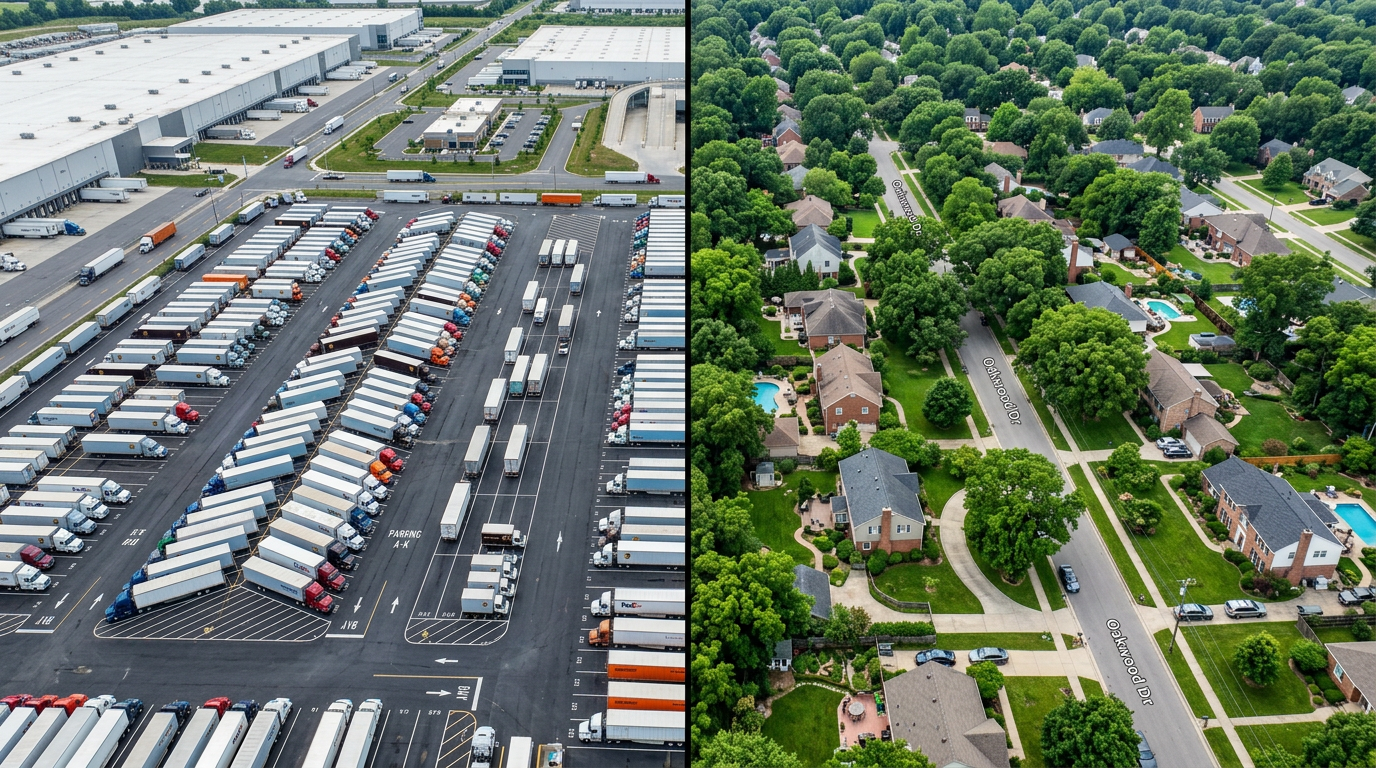
Commercial asphalt projects in Madison face significantly more demanding conditions than residential applications. The fundamental difference lies in traffic volume, load requirements, and performance expectations that must withstand both heavy use and Madison’s harsh continental climate.
Traffic Volume and Structural Demands
Heavy traffic loading defines commercial paving requirements. A medical office near University Hospital might see moderate daily traffic, while a shopping center on Madison’s west side or distribution facility in the expanding Sun Prairie corridor handles hundreds of vehicles daily, including delivery trucks and heavy equipment. Madison’s role as a regional hub means commercial properties often serve traffic from across South Central Wisconsin.
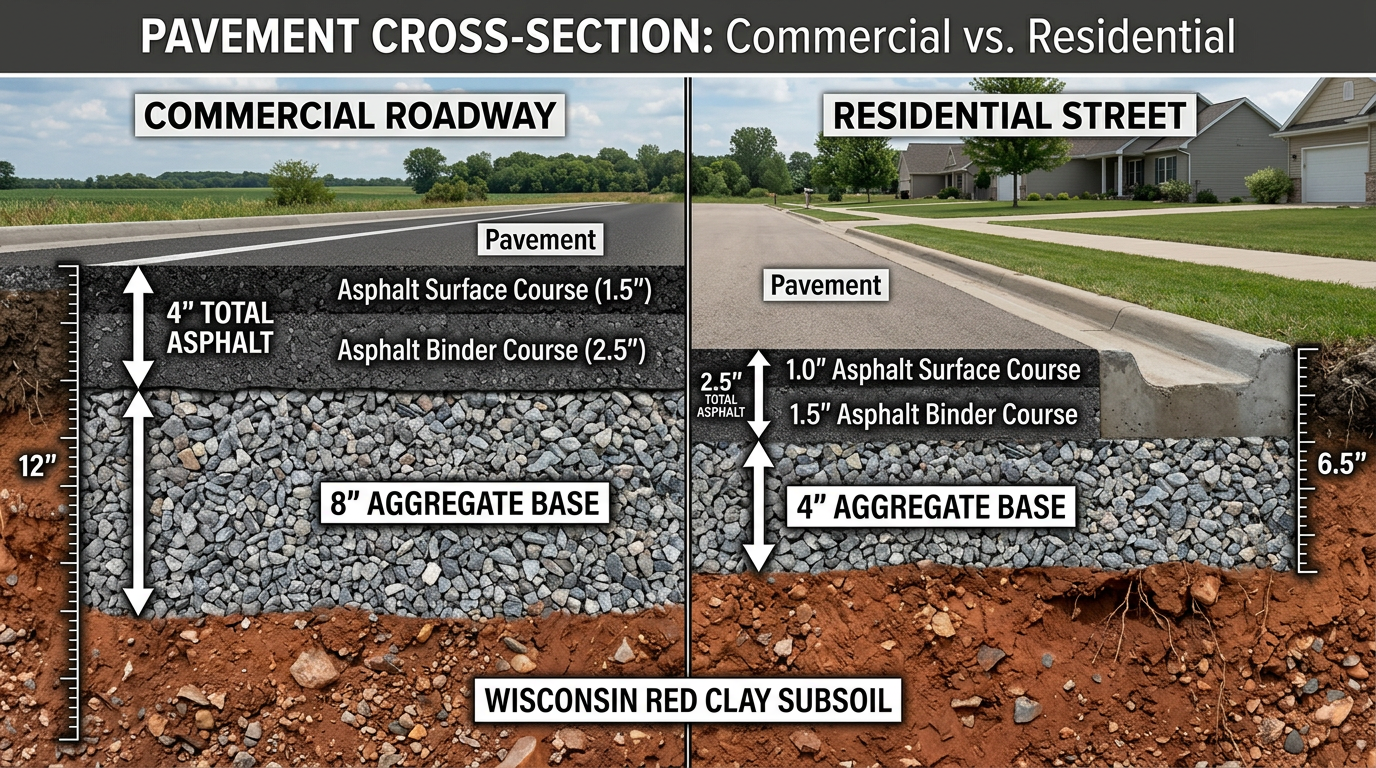
Thickness requirements for commercial projects typically demand 4-6 inches of asphalt compared to residential applications. Standard light commercial parking, such as office buildings along University Avenue, requires 4 inches of asphalt over a 6-inch compacted aggregate base. Heavy commercial applications—like loading areas serving Madison’s growing biotech sector or truck terminals supporting the region’s agricultural economy—often need 6-8 inches of asphalt with 8-12 inches of base material.
Base Course and Foundation Requirements
The base course requirements reflect these increased demands. While residential driveways might function adequately with 4-6 inches of base, commercial projects typically require 6-8 inches minimum, with heavy-use areas needing 8-12 inches of properly compacted aggregate base. This robust foundation becomes critical during Madison’s spring thaw periods when subgrade conditions are most vulnerable.
Proper drainage systems are essential for commercial projects. Madison’s position on the isthmus between two major lakes creates unique drainage challenges that commercial properties must address through sophisticated systems including catch basins, storm sewers, and detention facilities.
Compliance and Regulatory Requirements
ADA compliance requirements add complexity to commercial projects that residential work doesn’t face. Accessible parking spaces must maintain maximum 2% slopes, proper striping and signage, and compliant curb ramps with detectable warnings. These federal requirements are mandatory for commercial properties, affecting both design and construction costs.
Municipal permitting in Madison often requires detailed engineering plans, traffic studies, and environmental considerations for commercial projects. The city’s comprehensive planning process ensures commercial developments integrate properly with existing infrastructure and neighborhood character.
Residential Paving: Focused on Homeowner Needs
Residential asphalt projects in Madison operate under entirely different parameters, designed for light vehicle loading and homeowner priorities that emphasize aesthetics alongside functionality.
Simplified Structural Requirements
Thickness requirements for residential driveways typically range from 2-3 inches of asphalt, a significant reduction from commercial standards. While 2 inches represents the minimum for very light use and excellent subgrade conditions, 3 inches provides better durability for only a modest cost increase—particularly important given Madison’s freeze-thaw cycles that can quickly exploit thin pavement weaknesses.
Light vehicle loading considerations focus on passenger cars, SUVs, and pickup trucks weighing 3,000-6,000 pounds. This minimal pavement stress allows for thinner sections while still achieving 15-20 year life expectancy when properly constructed. However, homeowners with RVs, boats, or work trucks may need to consider 4-inch thickness to handle these heavier loads.
Base and Drainage Considerations
Base requirements for residential projects typically involve 4-6 inches of compacted aggregate base. While this seems modest compared to commercial standards, proper compaction remains critical. Many residential paving failures in Madison result from inadequate base preparation rather than insufficient asphalt thickness.
Residential drainage focuses on directing water away from the house foundation and preventing ice formation near garage entrances. Given Madison’s winter conditions and the area’s relatively flat topography, proper slope management becomes essential for both functionality and safety.
Aesthetic and Practical Priorities
Visual appeal plays a much larger role in residential work. Homeowners see their driveways daily and expect smooth finishes, clean edges, and proper transitions to garage floors. The driveway often represents a significant portion of a home’s curb appeal, making appearance as important as performance.
Cost considerations typically drive residential decisions more than commercial projects. Homeowners often seek the most cost-effective solution that provides adequate performance, while commercial properties focus on long-term durability and minimal maintenance requirements.
Madison’s Climate Impact on Both Project Types
Madison’s humid continental climate and unique isthmus geography create specific challenges that affect both commercial and residential paving projects, though in different ways.
Freeze-Thaw Cycling Effects
Temperature fluctuations represent the primary climate challenge, with temperatures regularly crossing the freezing point during winter and spring months. Commercial pavements, with their thicker sections and better drainage systems, generally handle these cycles more effectively than residential driveways. However, both project types require proper material selection and construction techniques to minimize thermal cracking.
Spring thaw conditions can be particularly challenging in Madison. The combination of frost heaving, saturated subgrades, and temperature cycling creates the most vulnerable period for asphalt pavements. Commercial projects typically incorporate deeper frost protection, while residential driveways rely on proper drainage and adequate thickness.
Seasonal Construction Constraints
Limited paving season affects project scheduling for both commercial and residential work. Madison’s climate restricts hot-mix asphalt production to roughly April through October, creating intense competition for contractor availability during peak season. Commercial projects, with their larger scale and longer lead times, often secure scheduling priority over residential work.
Weather-dependent quality means both project types must be scheduled carefully around Madison’s unpredictable spring and fall weather patterns. Proper timing ensures optimal compaction and long-term performance regardless of project size.
Making the Right Choice for Your Property
Understanding these fundamental differences helps property owners make informed decisions about their asphalt investments. Commercial properties require robust, engineered solutions that prioritize durability and regulatory compliance over initial cost. Residential projects can focus on cost-effective solutions that balance longevity with aesthetic appeal and budget constraints.
Project planning should consider not just immediate needs but long-term performance expectations. A commercial property expecting 20-year service life requires different specifications than a residential driveway where 15 years might be acceptable.
Local expertise becomes crucial given Madison’s unique challenges. Understanding how freeze-thaw cycles affect different pavement thicknesses, how the isthmus geography influences drainage, and how to work within the city’s permitting requirements can make the difference between a successful project and costly problems.
Wells Asphalt Paving brings decades of expertise to every project across our extensive Dane County service area, from downtown Madison state facilities to rural residential driveways in communities like Cross Plains, Oregon, and Waunakee. Our understanding of local conditions, combined with proper design and construction techniques, ensures your asphalt investment performs well regardless of project type.
Whether you’re planning a commercial development in Madison’s growing corridors or need a new residential driveway in one of the area’s established neighborhoods, we provide the expertise to guide your decision. Our team understands the unique requirements of both commercial and residential projects and can help you navigate the differences to achieve the best outcome for your specific situation.
Ready to discuss your paving project? Contact Wells Asphalt Paving today for a free consultation and detailed estimate. Our experience with both commercial and residential projects throughout South Central Wisconsin ensures you get the right solution for your needs, budget, and Madison’s demanding climate conditions. Call us now (608) 912-3772 to get started on your asphalt project.
