Fitchburg Commercial and Industrial Paving: Expert Solutions for South Side Business Corridor
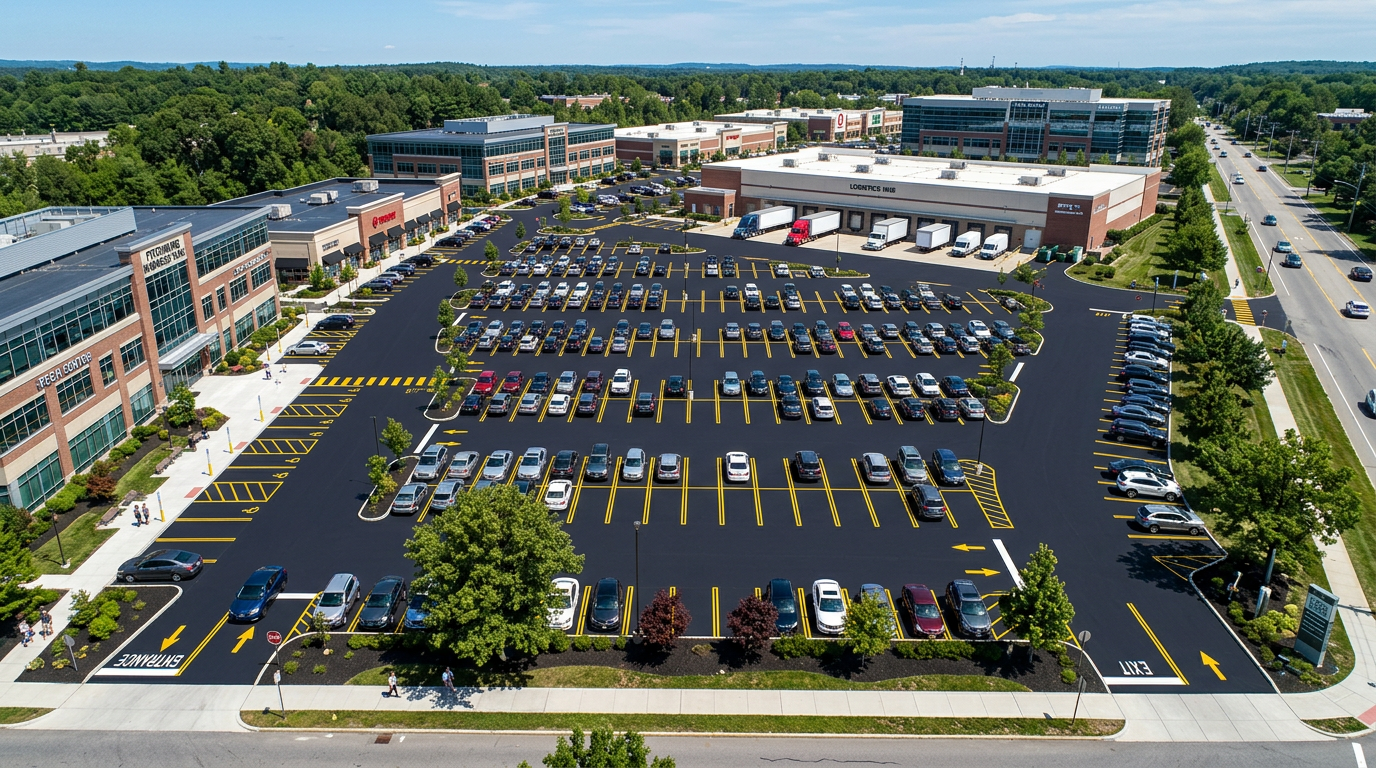
Commercial pavement design differs significantly from residential driveways, requiring careful analysis of traffic patterns, load requirements, and operational needs. In Fitchburg’s mixed-use environment, where office complexes neighbor retail centers and light industrial facilities along the Beltline, pavement specifications must account for diverse vehicle types and usage patterns.
Most Fitchburg commercial parking lots require 4-6 inches of asphalt depending on expected traffic volume. Light-use areas like medical offices may function well with 4 inches of asphalt over a 6-inch aggregate base, while high-traffic retail locations such as those near West Towne Mall need 5-6 inches to handle constant customer turnover and delivery vehicles.
ADA compliance represents a critical requirement for all Fitchburg commercial projects. Accessible parking spaces must maintain maximum 2% slopes, proper dimensions, and compliant access routes. Many commercial paving projects fail inspection due to inadequate attention to accessibility requirements, making it essential to work with experienced contractors who understand these regulations thoroughly.
Drainage design becomes particularly crucial in Fitchburg’s climate, where spring snowmelt from heavy Wisconsin winters and summer storms can overwhelm inadequate systems. Commercial pavements require minimum 1.5-2% slopes directing water to properly sized inlets, preventing the ponding that leads to accelerated pavement deterioration and potential liability issues for business owners.
Why Fitchburg’s Commercial Environment Demands Specialized Expertise
The Beltline corridor’s commercial development presents unique challenges that generic paving approaches cannot address effectively. Fitchburg’s position as a retail and office hub means pavements must accommodate diverse traffic patterns, from rush-hour commuters accessing Epic Systems and other major employers to delivery schedules that span extended hours.
Wisconsin’s humid continental climate creates additional complexity for commercial pavements. The freeze-thaw cycle that characterizes Dane County winters places tremendous stress on asphalt surfaces, particularly in areas with standing water or inadequate drainage. Commercial properties with their larger impervious surfaces and complex drainage requirements need pavement designs that account for thermal expansion and contraction throughout Wisconsin’s temperature extremes.
The area’s mixed commercial and residential development also creates specific traffic flow challenges. Office parks along the McKee Road corridor experience concentrated loading during commute hours, while retail centers see steady traffic throughout business hours. Industrial facilities on Fitchburg’s south side require pavements capable of handling both employee vehicles and heavy delivery trucks, often within the same pavement section.
Fitchburg’s continued growth means many commercial paving projects occur on previously undeveloped sites with varying soil conditions. The glacial soils common throughout Dane County can present subgrade challenges that require experienced evaluation and appropriate base design modifications – something Wells Asphalt’s team encounters regularly throughout our service area.
Commercial Paving Process and Timeline for Wisconsin Conditions
Professional commercial paving follows a systematic approach that begins with thorough site evaluation and traffic analysis. Wells Asphalt’s process starts with understanding your business operations, expected traffic patterns, and long-term facility plans. This information drives pavement design decisions that ensure adequate performance throughout the pavement’s service life.
Site preparation represents the foundation of successful commercial paving projects. Proper subgrade evaluation and preparation, including addressing any soft spots or drainage issues, prevents future pavement failures. In Fitchburg’s variable soil conditions, this phase often determines long-term pavement performance more than surface thickness alone.
Base course installation typically involves 6-8 inches of compacted aggregate for standard commercial applications, with increased thickness for areas expecting truck traffic. The base provides structural support and drainage, making proper compaction and material gradation critical for performance in Wisconsin’s challenging climate.
Asphalt placement follows engineered specifications, with surface and binder courses applied according to traffic requirements. Standard commercial parking areas receive 4 inches total thickness, while loading areas and truck routes require 6-8 inches to handle concentrated loads and turning stresses from delivery vehicles.
Wisconsin’s short paving season typically runs from April through October, with optimal conditions occurring during warmer months. Large Fitchburg commercial projects often require phased construction to accommodate business operations, with critical areas like main entrances completed first to maintain customer accessibility throughout the construction process.
Materials and Quality Standards for Fitchburg Commercial Projects
High-performance asphalt mixes designed for commercial applications incorporate specific aggregate gradations and binder grades suited to expected traffic and Wisconsin’s climate conditions. In Fitchburg’s freeze-thaw environment, Wells Asphalt typically specifies PG 58-28 or PG 64-22 binders that maintain flexibility during harsh Wisconsin winters while resisting rutting during summer heat.
Aggregate base materials must meet strict specifications for gradation, plasticity, and durability. Local aggregate sources provide materials well-suited to Wisconsin conditions, but proper testing ensures consistency and performance. The base course provides both structural support and drainage, making material quality essential for long-term pavement life in Dane County’s climate.
For heavy-duty applications such as loading docks and truck maneuvering areas common in Fitchburg’s industrial facilities, enhanced mix designs may include polymer modification or higher-grade binders. These areas experience concentrated loads and slow-speed traffic that create higher stress levels than typical parking areas.
Quality control procedures throughout construction ensure specification compliance and optimal performance. This includes density testing of both base and asphalt layers, temperature monitoring during placement, and joint construction that maintains pavement integrity. Proper compaction achieves the density necessary for durability and resistance to water infiltration – critical factors in Wisconsin’s freeze-thaw environment.
Industrial Pavement Solutions for Heavy-Duty Applications
Fitchburg’s industrial facilities require pavement designs that exceed standard commercial specifications. Distribution centers, manufacturing facilities, and service operations generate traffic loads and patterns that demand specialized engineering approaches from experienced contractors like Wells Asphalt.
Heavy-duty pavement design typically involves 6-8 inches of asphalt in multiple lifts, often with enhanced base thickness of 8-12 inches. Loading dock areas and truck maneuvering zones experience the highest stress levels, requiring careful attention to mix design and structural adequacy. Container handling equipment and loaded semi-trailers create concentrated loads that can quickly damage inadequately designed pavements.
Turning and braking zones present particular challenges for industrial pavements. Areas where trucks decelerate approaching loading docks or navigate tight turns experience high shear stresses that can cause rutting and shoving in standard mixes. Enhanced mix designs provide superior resistance to these distresses common in industrial paving applications.
The operational requirements of Fitchburg’s industrial facilities often necessitate phased construction to maintain business continuity. Critical areas like main truck routes and primary loading docks receive priority, with secondary areas completed during lower-activity periods to minimize disruption to daily operations.
Long-Term Performance and Maintenance in Dane County Climate
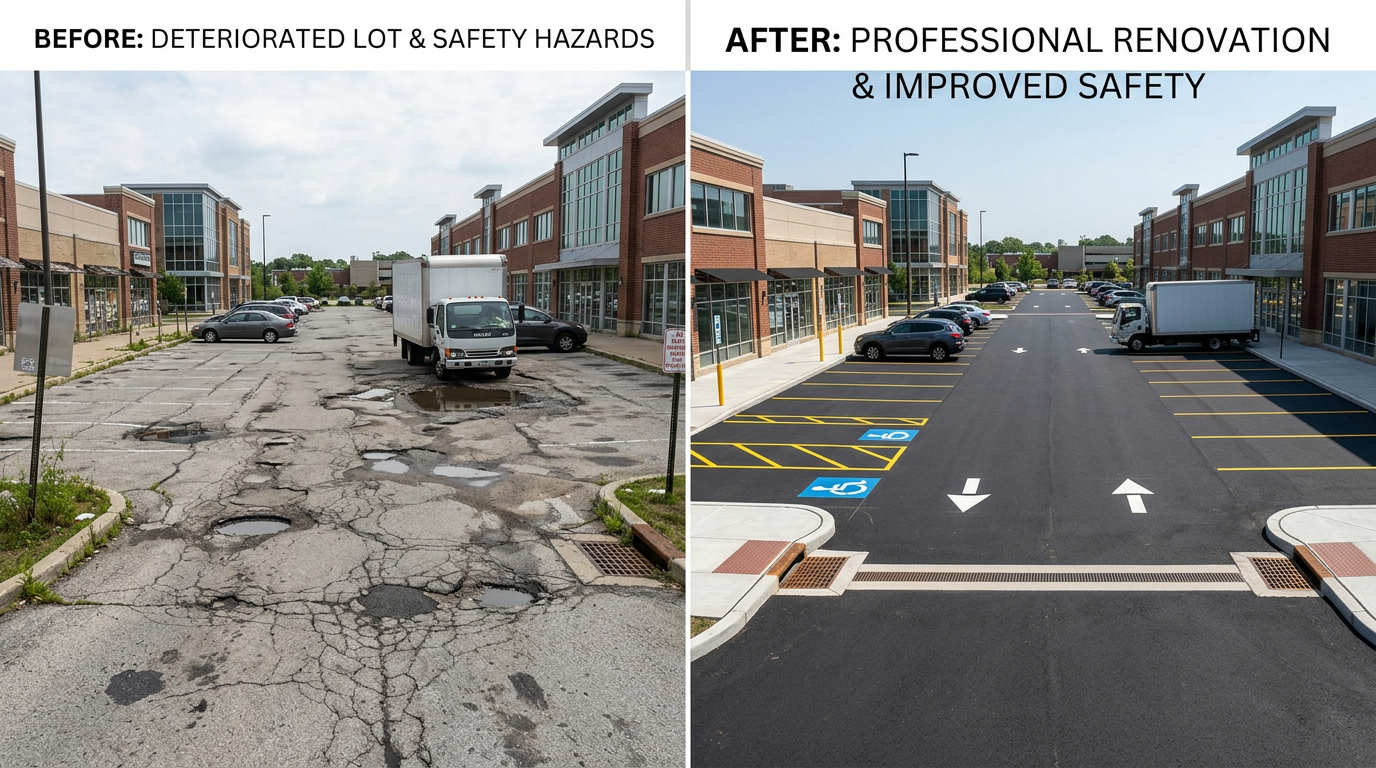
Preventive maintenance represents the most cost-effective approach to extending commercial pavement life in Wisconsin’s challenging climate. Regular sealcoating every 3-4 years protects the asphalt surface from oxidation and water infiltration, while crack sealing prevents minor issues from developing into major repairs that could disrupt business operations.
Drainage maintenance proves particularly critical for Fitchburg commercial properties. Keeping inlets clear and maintaining proper slopes prevents water accumulation that accelerates pavement deterioration during Wisconsin’s freeze-thaw cycles. Spring inspections following snowmelt help identify any drainage issues before they cause significant damage.
Seasonal considerations affect both maintenance timing and techniques in Fitchburg’s climate. Crack sealing and patching work best during warmer months when materials cure properly, while winter damage assessment guides spring repair priorities for commercial property managers.
Wells Asphalt’s maintenance programs help Fitchburg businesses protect their pavement investments through systematic care tailored to each property’s specific needs and usage patterns. Regular maintenance extends pavement life significantly while maintaining the professional appearance that supports business success in Dane County’s competitive commercial market.
Selecting an experienced commercial paving contractor makes the difference between a pavement that serves your business reliably for decades and one that requires frequent repairs and early replacement. Wells Asphalt Paving brings the engineering knowledge, construction expertise, and local experience necessary for successful commercial and industrial projects throughout Fitchburg and the greater Madison area.
Our comprehensive approach addresses everything from initial design through long-term maintenance planning, ensuring your pavement investment supports business operations effectively while withstanding Wisconsin’s demanding climate conditions. We understand that commercial paving projects require minimal disruption to business operations, careful attention to accessibility requirements, and construction quality that delivers long-term value.
Whether you’re developing a new retail center along the Beltline, expanding an existing office complex, or upgrading industrial facilities on Fitchburg’s south side, professional pavement design and construction provide the foundation for business success.
Ready to discuss your Fitchburg commercial or industrial paving project? Contact Wells Asphalt Paving today for a free consultation and estimate. Call us at (608) 912-3772 or visit our website at wellsasphaltpaving.com to learn how our decades of experience serving Dane County businesses can benefit your next paving project.
